

Walking in
How to feel less awkward in groups
You stand outside the door, hand on the handle, sure that everyone inside already knows each other and you will have nothing to say. Almost everyone feels this. Here is the way through it.
To feel less awkward in groups, go back to the same small one more than once. Awkward is mostly unfamiliarity, and the only real cure for that is a second visit.
You cannot talk yourself out of feeling awkward, the same way you cannot decide to relax. What you can do is pick one small group that meets again, walk in for the thing it does, and let the room get familiar. The first time anywhere is stiff for everyone. The second time is when your shoulders come down a little, all on their own.
Awkward is not who you are. It is just the feeling of being new.
Why do I feel so awkward around new people?
Because your body reads a room of strangers as something to brace for, and that bracing is exactly what shows up as awkward. It is not a flaw in you.
When everyone is unfamiliar, you stay slightly on guard without meaning to, scanning for where you fit and what you are supposed to say. That low hum of alert is what makes your hands feel wrong and your sentences come out stiff. It is not a personality defect and it is not rare. It is the standard human response to a room you have never been in, and it quiets down the moment the faces stop being strange.

What actually works
Let the activity do the talking.
The advice to "just be confident" is useless, because confidence is the result, not the lever. The lever is picking a setting with a built-in thing to do, so there is always an answer to "what now," and it is never "make small talk with a stranger."
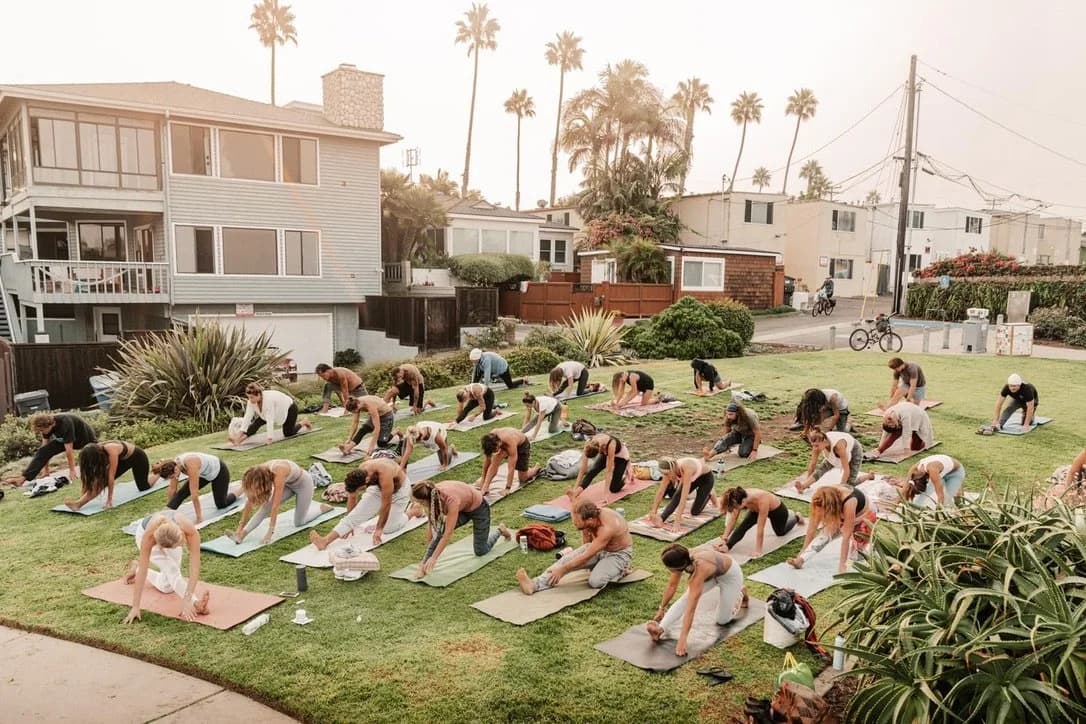
A walk, a class, a song circle, a shared table: each one hands you something to look at and do with your hands, so the conversation happens sideways, off the back of the activity, instead of head-on. That is far easier than a room where talking is the only event.
How do I actually walk into the room?
Pick one recurring group built around an activity, lower the stakes of the first visit, and plan to come back before you judge it. Three plain steps:
Choose an activity, not a mixer
A group that does a thing beats a room where talking is the whole event. The activity gives your hands a job and your nerves somewhere to go.
Let the first time be quiet
You do not have to perform or win the room. Showing up and watching counts. A standing group means a low-key first visit just buys you an easier second one.
Come back before you decide
The first time is awkward for everyone, so it tells you almost nothing. The second time is when faces turn familiar. Most people quit after one and blame themselves.
You do not have to be the most comfortable person in the room. You have to walk in twice.
What if the awkwardness is keeping me alone?
Then the fix is not getting smoother at parties, it is finding one small room you can return to until it stops being scary. The goal is a few familiar faces, not a crowd you charm.
A lot of people read their own awkwardness as proof they are not built for this, and slowly stop going out at all. But the same thing that makes a new room hard, having no repeats yet, is the exact thing that fixes it once you build a few. You do not need to become a different person. You need one standing group where the faces are already known.
Where this lands
A small room with the same faces.
A Circle is a small local group on a standing schedule, which is the one thing a room full of strangers can never be: familiar by the second visit. The same handful of people keep ending up together, on purpose, around something they actually want to do.
You pick what the Circle is about, find a few people near you, and come back. The format and the rhythm do the heavy lifting, so the awkward part shrinks each week until it is just a room you know.
Where to start
Pick one Circle or event near you that meets again, choose it for the activity, and go twice before you decide anything. If the awkwardness has quietly grown into feeling alone, it helps to know that is common and that it eases once you have a standing room to return to.
Common questions
How do I feel less awkward in groups?
Why do I feel so awkward around new people?
How can I be less awkward if I have social anxiety?
What do I do with my hands and eyes when I feel awkward?
Is it better to go to events alone or bring a friend?
Will I always feel this awkward, or does it get easier?
Awkward fades the second time you walk in.
Frequency hands you a small room near you that meets on a rhythm, so the same faces keep showing up and new stops being scary. Join the Beta and find your people.
Start a Circle