
Belonging
Lonely but not alone
A hundred contacts. No one to call on a Tuesday. If your life looks full and still feels empty, you are not broken and you are not the only one.
High-functioning loneliness is feeling alone while your outer life looks fine. You hold down a job, keep plans, and answer texts, and you still have no one who really knows how your week went.
The function is real. So is the loneliness. They sit next to each other, which is exactly why it is so easy to miss and so hard to say out loud. Nothing on the surface looks wrong. The fix is not trying harder at your life. It is a few people you keep showing up for, in a place you keep coming back to. This page covers all of it: what the feeling is, why the old third places thinned out, why the feed makes it worse, and the small, real thing to reach for instead.
A full phone is not the same as someone to call on a Tuesday.
What is high-functioning loneliness?
It is the gap between a life that works and a life that feels connected. You are capable, busy, and well-liked, and you still go long stretches without a real conversation.
The word "high-functioning" is the trap. Because you are managing, no one worries about you, including you. You keep the calendar full and the surface smooth, and the quiet part, that you have not been truly known in a while, never makes it into a sentence out loud.
Can you be lonely but not alone?
Yes. You can be surrounded all day and still feel unseen, because loneliness is about being known, not about how full the room is.
This is the part that makes people feel a little crazy. By every visible measure you are connected: coworkers, group chats, a busy weekend. And the ache is still there, because none of it adds up to one person who knows the unedited version of your week. Being lonely in a crowd is not a contradiction. It is the most common kind there is.
Why do I feel lonely when I have friends?
Because contacts are not company. You can know a lot of people and still have no one who knows what kind of week you just had.
Loneliness tracks depth, not count. A long contact list says you have met people. It says nothing about whether anyone would notice if you went quiet for a month. Most of us have plenty of acquaintances and a short list of people we would actually call when something goes sideways, and for a lot of adults that short list has slowly shrunk to almost no one. If that is where you are, the adult-friendship guide goes deeper on how those short lists rebuild.
What is a third place, and why does it matter?
A third place is somewhere that is not home and not work where you keep seeing the same faces: a cafe, a court, a class, a regular table. The sociologist Ray Oldenburg named these the "third places."
Home is the first place, work is the second, and the third is everything in between where the informal life of a neighborhood actually happens. "Third place" is Oldenburg's original term and "third space" is the way most people say it now; they mean the same thing. They matter because most adult friendships do not start with a grand gesture. They start with running into the same person enough times that hello turns into a conversation. When the third places thin out, the easy on-ramps to friendship go with them, and making friends starts to feel like a project instead of a side effect.
What counts as a third place?
The corner cafe, the barbershop, the library, the gym, the church hall, the run club, the park bench with the same dog-walkers. Any spot where you can show up alone and be known.
Oldenburg's test is simple: it is neutral ground, it is easy to get to, the same regulars turn up, and you can stay a while without buying your way in. The building matters far less than the rhythm. A back corner of a coffee shop where the same six people read on Sunday mornings is more of a third place than a huge venue nobody returns to.
Why they got rare
Cost, cars, and screens squeezed the third places out
What thinned out was not the buildings. It was the standing reasons to keep seeing the same faces.
Rent pushed out the cheap corner spots that let people linger. Sprawl put everything too far apart to walk to, so the casual run-in turned into a drive you have to plan. And a phone started standing in for the hangout, filling the same idle minutes a stoop or a counter used to.
The good news is that the missing piece is a rhythm, and a rhythm is something a town can rebuild. You do not have to wait for the old corner store to come back. You can find a standing time that already exists, or hold one of your own.
The third places did not just vanish. The rhythms stopped getting held.
How do I quit doomscrolling?
You quit doomscrolling by replacing the feed, not by deleting it. The feed is filling a real gap, so the way out is to put something real in that gap: a small thing to reach for in the moment, and somewhere to be that actually misses you when you skip it.
Willpower loses to a feed built to be hard to close. The apps never quite end, so there is no natural stopping point and the next thing is always one swipe away. Blaming yourself misses the point; you are up against software made by teams whose whole job is to keep you scrolling. The way to win is to make the real thing easier to reach for than the app.
What the feed can't fake
The feed gives you contact. It never gives you a room.
A thousand faces a day, and not one that notices when you are gone.
The scroll hands you endless people and zero presence. You can watch a hundred lives go by and still close the app feeling like nobody clocked you were there. That is the trade the feed makes: contact without belonging.
A room is the opposite. Show up to the same handful of people every week and your absence starts to leave a hole. That is the thing the scroll cannot copy, and the thing that finally makes the phone easy to put down.
Does deleting the app work?
Not on its own. Subtraction without replacement snaps back within days, because nothing takes the feed's place.
Delete the app and the gap it was filling is still there: the same idle minutes, the same wired evenings, now with nothing to reach for. So you reinstall it, or you find another feed. The version that lasts pairs taking the app away with adding a real thing to do, ideally one with people in it. For the urge in the moment, keep the bar low: a short walk, a few pages, a text to a friend, ten minutes outside. For the evenings that send you scrolling, the real fix is bigger than any single moment, and it looks like a standing plan.
You will not out-willpower the feed. You replace it with somewhere to be.
How do I actually feel less alone?
Pick one thing that meets on a schedule and go back to it more than once. Familiarity does the slow work that effort cannot.
The instinct is to fix this with a big push: download three apps, say yes to everything, force it. The thing that actually moves the needle is much smaller and much more boring. Find a group that meets on a regular rhythm, show up, then show up again. The second time is when a stranger starts to become a familiar face, and the fifth time is when a familiar face starts to become a friend.
How to
How to feel less lonely as an adult
Loneliness eases through repeated, real-world run-ins with the same people. Three small steps to trade a full phone for a standing plan.
- 01
Pick one thing that repeats
Choose one group, class, court, table, or Circle that meets on a set rhythm near you. Not five. One.
- 02
Show up twice
The first visit is a stranger in a room. The second is when a stranger starts to become a familiar face.
- 03
Trade the feed for the room
When the empty evening pulls you to scroll, reach for the standing plan instead. Same time, same faces, next week.
You do not need more people in the room. You need a few you keep coming back to.
How Frequency helps
A few real people, a standing time
The opposite of lonely is not a crowd. It is a standing plan with the same faces.
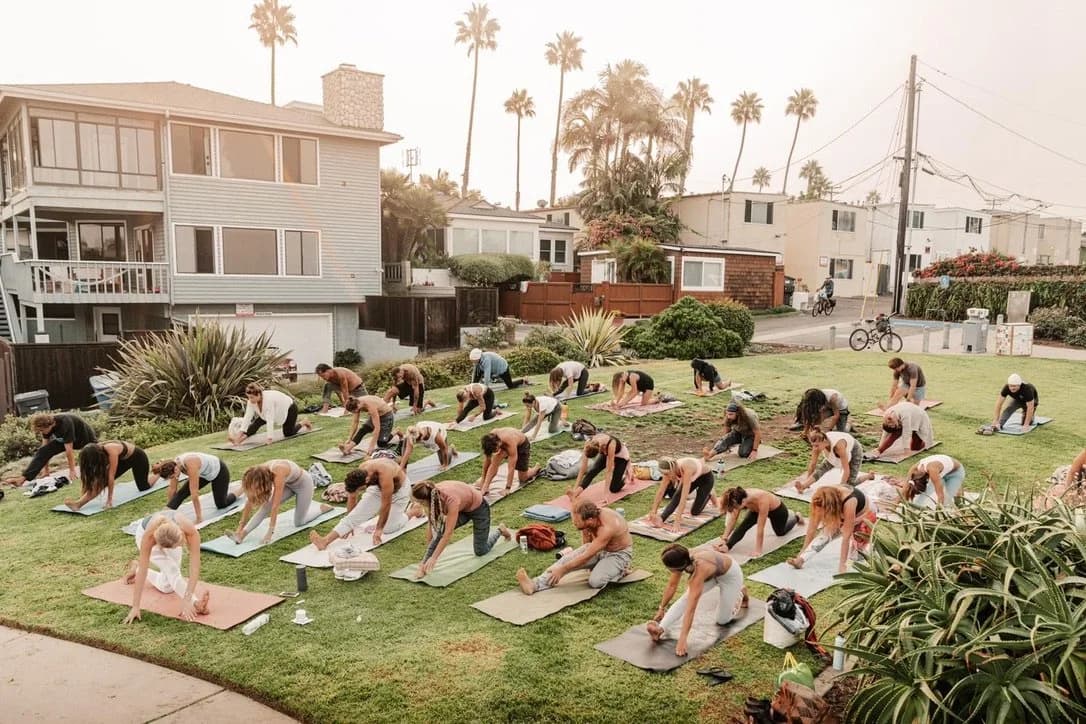
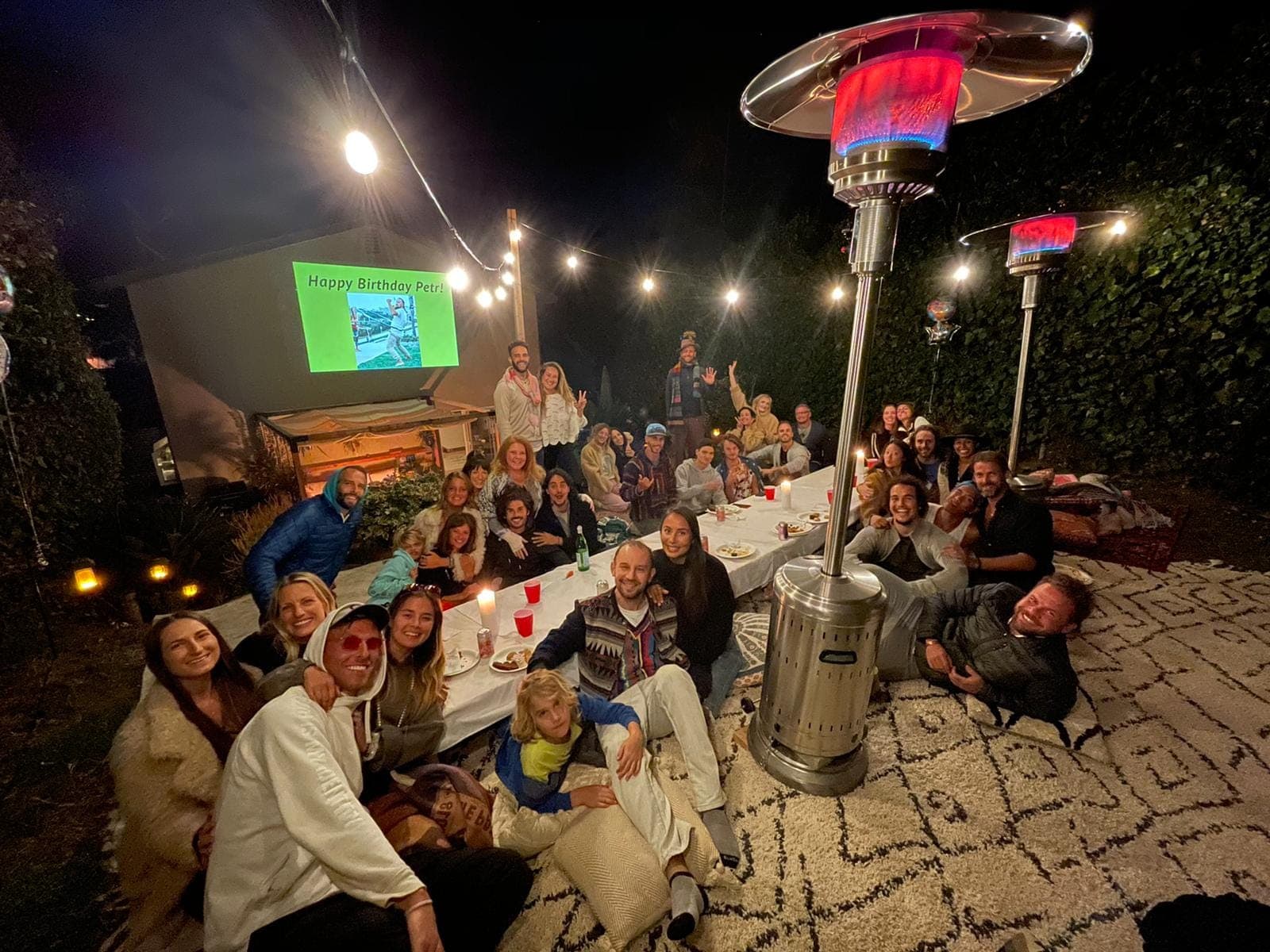
Frequency is a Community Collective, built to help every community effort near you succeed. A Circle is a small group around something you care about that meets on a set rhythm, so the same handful of people keep ending up in the same room. A walk, a supper table, a book, a sit. That regular run-in is the thing that turns strangers into regulars, and it is a modern third place you do not have to own a building to have.
You do not have to be interesting or outgoing. You do not have to arrive with friends. You pick what you practice, find a few people near you, and come back. Joining is free, and Frequency never takes a cut of your own bookings; you can see exactly how that works on the pricing page.
Where to start
Start small, then show up twice
You do not have to fix your whole life this week. You have to walk into one room.
The easiest first step is to look at what is already happening near you: the Circles meeting this week, the events you could just walk into. Pick one that meets again, go once, and go back. Nothing more than that.
New to town and starting from zero? The new-city guide is the same idea aimed at week one. Always wired and can't switch off? Start with a few ways to calm down fast.
Common questions
What is high-functioning loneliness?
High-functioning loneliness is feeling alone while your outer life looks fine. You have a job, plans, and a full phone, but no one you would call on a Tuesday night. The function is real and so is the loneliness; they just live side by side.
Can you be lonely but not alone?
Yes. You can be surrounded all day and still feel unseen, because loneliness is about being known, not about how many people are in the room. A packed calendar and a quiet ache can be true at the same time. That gap is the whole experience of being lonely but not alone.
Why do I feel lonely when I have plenty of friends?
Because contacts are not the same as company. You can know a hundred people and still have no one who knows what your week was actually like. Loneliness tracks the depth of connection, not the count, so a full contact list and a quiet Tuesday can both be true.
What is a third place, and why does it matter?
A third place is somewhere that is not home and not work where you see the same faces on a regular rhythm: a cafe, a court, a class, a regular table. The sociologist Ray Oldenburg named these "third places," the anchors of community life outside the house (the first place) and the job (the second). They matter because most adult friendships form from repeated, low-pressure run-ins, and when third places disappear, so do the easy ways to make friends.
What is the difference between a third place and a third space?
There is no real difference. "Third place" is the original term from Ray Oldenburg, and "third space" is the way most people say it now. Both mean the same thing: a neutral, welcoming spot outside home and work where the same people gather on a regular rhythm.
What are examples of third places?
The corner cafe, the barbershop, the neighborhood pub, the library, the gym, the church hall, the park bench, the regular run club. A third place is any spot where you can show up alone, be known by name, and stay a while without buying your way in. The key is not the building, it is that the same people keep coming back.
Why have third places disappeared?
They got squeezed out by cost, cars, and screens. Rent pushed out the cheap corner spots that let people linger, sprawl put everything too far to walk to, and a phone started standing in for the hangout. What thinned out was not the buildings so much as the standing, low-pressure reasons to keep seeing the same faces.
How do I quit doomscrolling?
Replace the feed instead of trying to resist it. Pick one real thing to reach for when you would normally open the app, and aim for the kind that has other people in it: a standing weekly meetup, a walking group, a Circle. You quit a habit by swapping it for something better, not by white-knuckling an empty evening.
Does deleting social media apps actually work?
Deleting an app helps for a few days and then usually slips, because nothing took its place. The version that sticks pairs removing the app with adding a real thing to do instead, ideally one with people in it who notice when you do not show up. Subtraction without replacement snaps back.
What should I do instead of scrolling?
Start small and real: a five-minute walk, a few pages, a text to a friend, ten minutes outside. Then add the bigger fix, a standing time to be around the same people each week, so the empty evening that sends you to the feed has somewhere else to go.
How do I stop feeling lonely as an adult?
Pick one thing that meets on a schedule and go back to it more than once. Loneliness eases through repeated, real-world run-ins with the same people, not through one big push. Start small, show up twice, and let familiarity do the slow work.
Is loneliness the same as being alone?
No. Being alone is a setting; loneliness is the gap between the connection you have and the connection you want. You can be alone and content, or surrounded and lonely. The fix is not more people in the room, it is a few people you keep coming back to.
The opposite of lonely is a standing plan.
Frequency turns a screen full of strangers into a few people who expect you on Thursday. Join free and find your room.